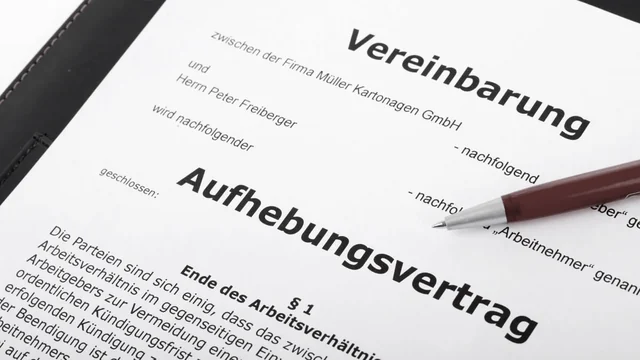

When your employment ends, the working time account has to be settled. Positive hours become a claim for pay. Negative hours raise the question of whether your employer can take money back from your final salary.
Both sides often get this wrong. Employees forget overtime they could claim, and employers deduct minus hours they have no right to. This guide explains the rules and what to check in your final payslip.
Overtime: When Do You Get Paid?
German law has no general rule that every extra hour is paid. You can claim overtime pay if:
- You actually worked the hours, beyond your contractual working time, and
- your employer is responsible for them, because it ordered, approved or knowingly accepted the overtime, or the work could not be done otherwise.
In a dispute, you must show both. A record of the days and hours you worked, together with emails or messages showing that your manager knew, is the best evidence. Employers must record working time, but this does not shift the burden of proof to them.
Flat-rate clauses. Many contracts say that overtime is covered by the salary. In standard contracts, such a clause is only valid if it is clear how many hours are covered, for example "up to ten hours per month". A clause that covers all overtime without a limit is invalid, and the overtime can then usually be claimed.
High earners. If your salary is above the contribution ceiling for pension insurance (€8,450 per month in 2026), courts generally assume that overtime is part of the job and not paid separately, unless your contract says otherwise.
Part-time employees. Surcharges that only apply after full-time hours can discriminate against part-time staff.
Overtime at the End of the Job
If you have overtime credits when you leave, there are three options:
- Time off. Depending on the rules for your working time account, your employer can let you take the overtime as time off during your notice period. A release from work only reduces the balance if this is clearly stated.
- Garden leave. Overtime can be offset against a release from work, but only if your employer clearly says so. See garden leave.
- Payment. Any credit that remains on the last day must be paid out at your normal hourly rate. Surcharges only apply if your contract or a collective agreement provides for them.
Free Case Review by an Employment Lawyer
An employment lawyer looks at your case and tells you where you stand and what is realistic.
- Free and non-binding
- In English
- Confidential
Minus Hours: When Can Your Employer Deduct?
Minus hours (Minusstunden) mean that you worked less than your contract requires. Your employer may only deduct them from your final pay if:
- there is an agreement on a working time account that allows a negative balance, in your contract, a collective agreement or a works agreement, and
- you caused the shortfall, for example because you chose to leave early under flexitime.
Your employer bears the risk if it did not give you enough work. If you were ready to work but there was nothing to do, for example due to a lack of orders or a shop closure, you keep your full pay. Minus hours of this kind cannot be deducted.
| Reason for the minus hours | Deduction possible? |
|---|---|
| You left early under flexitime by your own choice | Yes, if a working time account allows negative balances |
| Your employer sent you home for lack of work | No |
| You were ill with a sick note | No, sick days count as worked |
| Public holidays | No |
| No working time account agreed | No offsetting of minus hours. But unexcused absence is unpaid in any case |
A negative balance that you caused is treated like an advance on your salary. Your employer can usually deduct it in full from your final pay. If your final pay is not enough, it can ask you to repay the rest. For other claims against you, such as damages, deductions are limited to the part of your salary that creditors could seize.
Check Your Final Payslip
- Ask for a statement of your working time account on the last day.
- Compare it with your own records. Note any overtime that is missing.
- Check deductions. Look for minus hours, and ask for the basis in writing.
- Mind the deadlines. Many contracts contain exclusion periods of three months. Claim unpaid overtime in text form, for example by email, in good time. Otherwise, claims expire after three years from the end of the year in which they arose.
If you negotiate a termination agreement or settlement, agree explicitly how the working time account will be settled. A general clause that "all claims are settled" can otherwise wipe out your overtime.
Your employer is refusing to pay your overtime? Have your claim checked before the exclusion period runs out.
Get Your Free Case Review →Points for Expats
- Trust-based working time. Many international employers in Germany use trust-based working time (Vertrauensarbeitszeit). Overtime can still be claimed, but you will need your own records.
- Different expectations. In some countries, salaried staff are never paid for overtime. In Germany, it depends on your contract and your salary level.
- Maximum working time. German law limits working time to eight hours a day, or up to ten hours if this is balanced to an average of eight hours over six months. Collective agreements can differ, and the limits do not apply to senior executives. A reform of the Working Time Act is under discussion.
Frequently Asked Questions
Can my employer make me reduce my overtime during my notice period?
Yes, it can usually instruct you to take time off. Any balance left at the end must be paid.
Is overtime pay taxed?
Yes, like normal salary. Surcharges for night, Sunday and holiday work can be tax-free within limits. Tax relief for overtime surcharges has been discussed but was not in force at the time of writing.
I had a negative balance because my manager told me to stay home. Can they deduct it?
No. If your employer did not provide work, it must still pay you.
What if there are no time records?
Make your own list as precisely as possible, with dates, times and tasks. Witnesses and emails help.