
In most German court cases, the losing side pays everyone's costs. Employment law is different. In the first instance, each side pays its own lawyer, whatever the outcome. If you challenge a dismissal and win, your lawyer's fees are still your own. See what an unfair dismissal claim costs.
This is why legal expenses insurance (Rechtsschutzversicherung) with employment law cover (Arbeitsrechtsschutz) is so common in Germany. It pays for a lawyer and the court, so the cost question does not decide whether you defend yourself.
What Employment Law Cover Pays For
Employment law cover is usually part of a package for private and professional matters. In a dispute with your employer, it typically pays:
- your own lawyer's statutory fees, including for negotiating a settlement,
- court fees,
- costs of witnesses and experts appointed by the court,
- in the second instance, the other side's lawyer if you lose.
Typical cases are a dismissal, a warning letter, unpaid salary or bonus, a disputed reference or a demotion. Most policies have a deductible (Selbstbeteiligung), often between €150 and €300 per case.
The Waiting Period and When the Dispute Started
Two dates decide whether you are covered:
- The waiting period. Employment law cover usually starts only three months after the policy begins. Disputes that arise during this time are not covered.
- The insured event. What counts is not the date of the dismissal, but the first breach of your rights. A general announcement of job cuts is usually not yet a breach of your rights. But if your employer specifically threatened you with a dismissal before your policy started, the insurer may refuse to pay, even if the dismissal itself came later.
This means insurance only helps if you take it out well before any trouble at work. If you switch insurers, make sure there is no gap in cover.
Do not lie to an insurer about when a dispute started. If the insurer finds out, it can refuse cover and demand repayment.
Free Case Review by an Employment Lawyer
An employment lawyer looks at your case and tells you where you stand and what is realistic.
- Free and non-binding
- In English
- Confidential
What Is Usually Not Covered
- Disputes that started before the policy or during the waiting period.
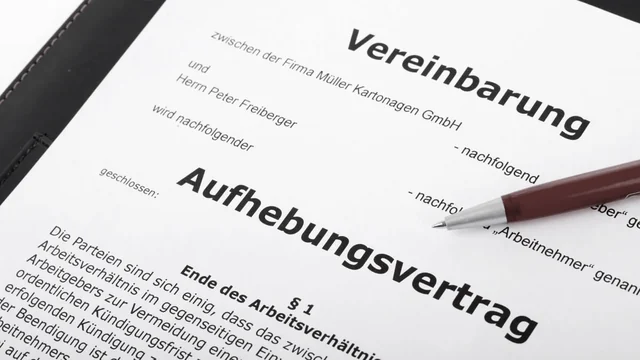
- Termination agreements without a prior breach. If your employer simply offers you a termination agreement, many insurers do not pay for the advice. If the employer has also threatened a dismissal, most do. Some policies include a small amount for advice in any case.
- Fees above the statutory rates. If your lawyer charges an hourly rate, the insurer only pays the statutory fees.
- Disputes as a managing director of a company, unless the policy explicitly includes this.
If the insurer refuses cover because it sees no chance of success, you can challenge this through a binding opinion from your lawyer or an arbitration procedure, depending on your policy.
How to Use Your Insurance
- Contact a lawyer first. You can choose your lawyer freely. Insurers may suggest a lawyer, but you are not obliged to accept.
- Give the lawyer your policy number. The lawyer usually requests confirmation of cover (Deckungszusage) from the insurer for you.
- Do not wait for confirmation. The three-week deadline for a claim against a dismissal keeps running. Your lawyer can file the claim while the insurer is still checking.
Dismissed and insured? A lawyer can check your case and handle the insurance for you.
Get Your Free Case Review →If You Do Not Have Insurance
Not having insurance does not mean you cannot defend yourself. These are the main alternatives:
- Union membership. Unions represent their members in employment disputes free of charge. There is usually a minimum membership period, often three months, and the dispute must normally have arisen after you joined.
- Legal aid (Prozesskostenhilfe). If your income and savings are low, the state covers your lawyer's fees in court. Your case must have a reasonable chance of success, and the application must be made before the end of the proceedings. You may have to repay the costs in instalments over up to four years.
- Advice aid (Beratungshilfe). For advice outside court, low-income employees can get a certificate from the local court and pay only a small fee.
- Paying from the severance. Many claims against a dismissal end with severance, which is often many times the fees. With short service, the difference is smaller, and there is no guarantee of severance. See severance pay in Germany.
- Filing the claim yourself. In the first instance, you can file a claim without a lawyer. For negotiation, a lawyer is usually worth it.
What a Policy Costs
Policies combining private and professional cover, including employment law, typically cost between €15 and €40 per month for an individual, depending on the insurer, the deductible and the scope. When comparing policies, check:
- that employment law cover (Arbeitsrechtsschutz) is included,
- the length of the waiting period,
- whether advice on termination agreements is covered,
- the deductible and whether it decreases if you do not claim,
- free choice of lawyer.
Frequently Asked Questions
Can I take out insurance after receiving a dismissal?
You can, but it will not cover this dismissal. It only helps with future disputes after the waiting period.
Does the insurer pay if the case ends with a settlement?
Yes. Settlement fees of your lawyer are covered. Some insurers question settlements that include claims which were not in dispute, so let your lawyer handle the communication.
Does my insurance from my home country cover a German case?
Often not, especially for policies from outside the EU. Some policies from other EU countries cover disputes Europe-wide. Check your policy terms.
Does the insurer pay if I lose?
Yes. In the first instance, there are only your own lawyer's fees and the court fees, both covered. In an appeal, the insurer also pays the other side's lawyer.