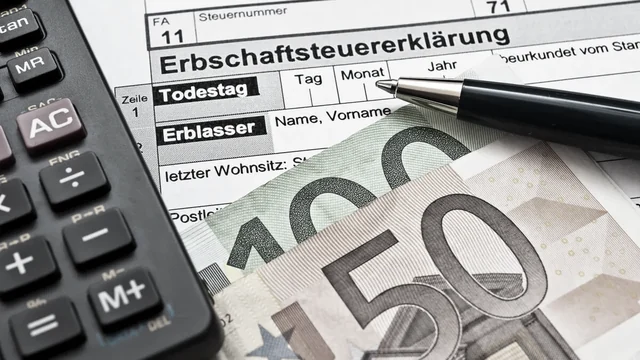

For expats, inheritance raises two questions: which country's law decides who inherits, and which country may tax the inheritance. Within the EU, the first question is answered by the EU Succession Regulation. Tax is a separate matter, decided by national law and tax treaties.
This overview explains the key principles of German inheritance law and links to detailed guides.
Which Law Applies?
Under the EU Succession Regulation, the law of the country where the deceased had their habitual residence at the time of death governs the whole estate. This applies to all assets, wherever they are located, including real estate abroad.
Choice of law. You can choose the law of your nationality for your estate. The choice must be made in a will. For example, a British citizen living in Germany can choose English law. If you have several nationalities, you can choose any of them.
Non-EU countries. Some countries apply their own rules to property located there, regardless of the EU rules. If you own real estate outside the EU, check the law of that country as well.
Who Inherits Without a Will?
Under German law, relatives inherit in orders: first descendants, then parents and their descendants, then grandparents. The spouse inherits alongside them. With the default property regime, a surviving spouse alongside children usually receives half of the estate. See statutory succession.
Wills
You can make a will by hand, entirely handwritten and signed, or at a notary. Married couples often use a joint will, the so-called Berlin will. See making a will in Germany and the Berlin will.
The Compulsory Portion
Children, spouses and, if there are no children, parents have a right to a compulsory portion (Pflichtteil) if they are disinherited: half of their statutory share, paid in money. See the compulsory portion.
Settling the Estate
- The heirs inherit automatically at the moment of death, including debts.
- Disclaiming. Heirs can disclaim within six weeks, or six months if the deceased lived abroad or the heir is abroad. See disclaiming an inheritance.
- Proof of inheritance. Banks and the land registry usually require a certificate of inheritance or a notarial will. See certificate of inheritance.
- Several heirs form a community of heirs and must manage the estate together. See community of heirs.
Inheritance Tax
German inheritance tax applies if the deceased or the heir lived in Germany. Close family members have high allowances, for example €500,000 for a spouse and €400,000 for each child. See inheritance tax in Germany.
Germany has inheritance tax treaties with only a few countries. Double taxation is avoided mainly by crediting foreign tax.
Planning Tips for Expats
- Make a will if you want your home country's law to apply or if the statutory rules do not fit your family.
- Check your property abroad. Some countries have special rules for real estate.
- Use gift allowances. Allowances renew every ten years.
- Keep documents accessible. Notarial wills are registered in Germany's central will register, which makes them easy to find.
Frequently Asked Questions
Does German law apply if I am not German?
Yes, if you live in Germany at the time of death, unless you chose the law of your nationality.
Is a will made in my home country valid in Germany?
Usually yes, if it meets the formal requirements of the country where it was made or of your nationality.
Do I need a lawyer to make a will?
Not necessarily. For international families, advice is strongly recommended, because the interaction of different laws is complex.