
Burnout is common among expats, who often combine demanding jobs with a new language, a new system and distance from family. When the sick leave gets longer, many employers react: with an offer to leave, pressure to resign or a dismissal.
German law gives you more protection than many expect. Illness on its own is not a reason for dismissal, and your employer must follow strict steps before it can end your job because of absences. This guide explains where you stand and how to avoid the mistakes that cost employees their job, their severance or their unemployment benefit.
When Can You Be Dismissed?
Illness does not protect you from a dismissal. In your first six months, or in a business with ten employees or fewer, the Dismissal Protection Act does not apply and your employer can dismiss you while you are ill without these conditions. Otherwise, a dismissal because of illness is only valid if:
- The outlook is negative. It must be expected that you will be unable to work for a long time or will be absent frequently in the future.
- The business is significantly affected, for example through high costs or serious disruption.
- The balance favours the employer, after considering your length of service, age, the cause of the illness and possible alternatives.
If your employer did not offer the workplace reintegration process, it is much harder for it to show that a dismissal was the only option. If work conditions caused or worsened your burnout, this also counts in your favour. If you have a recognised severe disability, which is possible for long-term mental illness, a dismissal also needs the approval of the integration office.
If your employer dismisses you because of your illness, it must continue to pay your salary for the rest of the six weeks, even after the job ends. See dismissal due to illness.
You must challenge any dismissal within three weeks, even while you are ill. See unfair dismissal claims.
Dismissed or pressured to leave during sick leave? Get your options checked before you sign anything.
Get Your Free Case Review →Getting Signed Off
Your family doctor (Hausarzt) can issue a sick note. For longer or more serious cases, a psychiatrist or psychotherapist is involved. Burnout is not a formal medical diagnosis in itself. Doctors often record it as exhaustion, depression or an adjustment disorder. This does not matter for your rights.
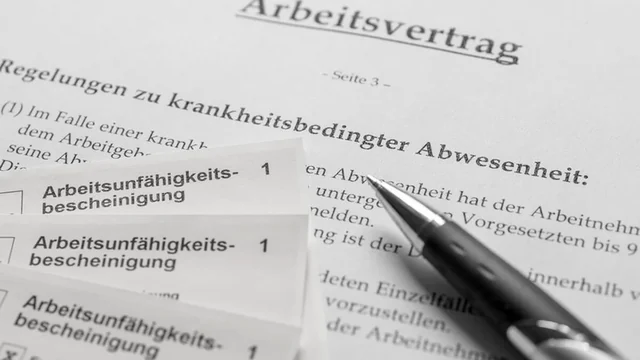
Inform your employer on the first day that you are unfit for work and for how long. You do not have to explain why. If you have statutory health insurance, your employer retrieves the sick note electronically from your insurer. With private insurance or a doctor abroad, you hand in a paper certificate. Keep the sick notes seamless: a follow-up certificate should be issued at the latest on the next working day after the previous one ends.
Free Case Review by an Employment Lawyer
An employment lawyer looks at your case and tells you where you stand and what is realistic.
- Free and non-binding
- In English
- Confidential
Pay During Long Sick Leave
| Period | Who pays | How much |
|---|---|---|
| Weeks 1 to 6 | Your employer | Full salary |
| From week 7 | Your statutory health insurer | Sickness benefit: 70 percent of gross, max. 90 percent of net, up to a ceiling |
| Maximum | Health insurer | 78 weeks for the same illness within three years, including the first six weeks |
Private health insurance. If you are privately insured, you only receive payments after six weeks if you have daily sickness allowance cover (Krankentagegeld), starting after the waiting period in your policy. Many policies end the cover if you are found permanently unable to do your job. Check your policy now, before you need it.
Salary continuation only starts after you have worked for your employer for four weeks.
Rehabilitation. For longer illnesses, a medical rehabilitation stay can help, often in a specialised clinic. It is usually paid by the pension insurance, which also pays a transitional allowance during the stay.
Returning to Work
Gradual return (stufenweise Wiedereingliederung). Your doctor can propose a plan to return step by step, for example four hours a day for two weeks, then six hours, then full time. You remain officially unfit for work during this time and continue to receive sickness benefit. Your employer usually does not pay salary during this time. Your employer must agree, unless you have a recognised severe disability, in which case you have a right to it. You can stop if it does not work. The weeks count towards the 78 weeks of sickness benefit.
Workplace reintegration (betriebliches Eingliederungsmanagement). If you have been unable to work for more than six weeks within twelve months, your employer must offer you a structured process to find out how to prevent further absences. Participation is voluntary. It can lead to changes in your workload, hours or role.
The reintegration process is an opportunity, not a trap. You decide which health information you share. If there is a works council, it can take part, and you can bring someone you trust.
Resigning Because of Burnout
If you resign, the employment agency can impose a blocking period of up to twelve weeks on your unemployment benefit. This does not apply if you had an important reason. A doctor's certificate stating that you had to leave this job for health reasons, and recommending that you leave, can be such a reason. A normal sick note is not enough. Get the certificate before you resign. A blocking period also shortens your total entitlement. If your sickness benefit ends after 78 weeks and you still cannot work, you can usually claim unemployment benefit while your capacity is assessed. See blocking periods.
The same caution applies to a termination agreement offered while you are ill. Do not sign under pressure.
Your Employer's Duties
Employers in Germany must assess risks at work, including psychological strain such as excessive workload, constant availability or conflict. If there is a works council, it can push for measures. You can raise workload problems in writing, which also documents them in case of a later dispute.
Points for Expats
- Therapy in English. Waiting times for therapy can be long. Your health insurer can help you find a therapist, including English-speaking ones. For faster access, use the appointment service on 116117, which can book a first consultation with a psychotherapist.
- Residence permit. Sick leave does not affect your permit while your employment continues. If a long illness puts your job at risk, speak to the immigration office early. See losing your job and your residence permit.
- Travelling home. Spending time with family abroad can help recovery. Agree it with your doctor first. If you receive sickness benefit, ask your health insurer for approval before any trip abroad, including within the EU, as payments can otherwise be suspended.
Frequently Asked Questions
Can my employer contact me during sick leave?
Only briefly and for important matters, such as handing over urgent tasks. You do not have to work or be available.
Can I be dismissed during sick leave?
Yes, but illness itself is not a valid reason unless the strict conditions above are met.
Do I have to take part in the reintegration process?
No. But declining can make it easier for your employer to argue later that it had no alternatives.
Do I build up holiday during long sick leave?
Yes. Statutory holiday you could not take because of illness generally expires 15 months after the end of the year in which it arose. Holiday from a year in which you still worked does not expire if your employer did not tell you to take it. When the job ends, untaken holiday is paid out.